
Greenfield Vs Brownfield Construction: What Works Best for Industrial Projects
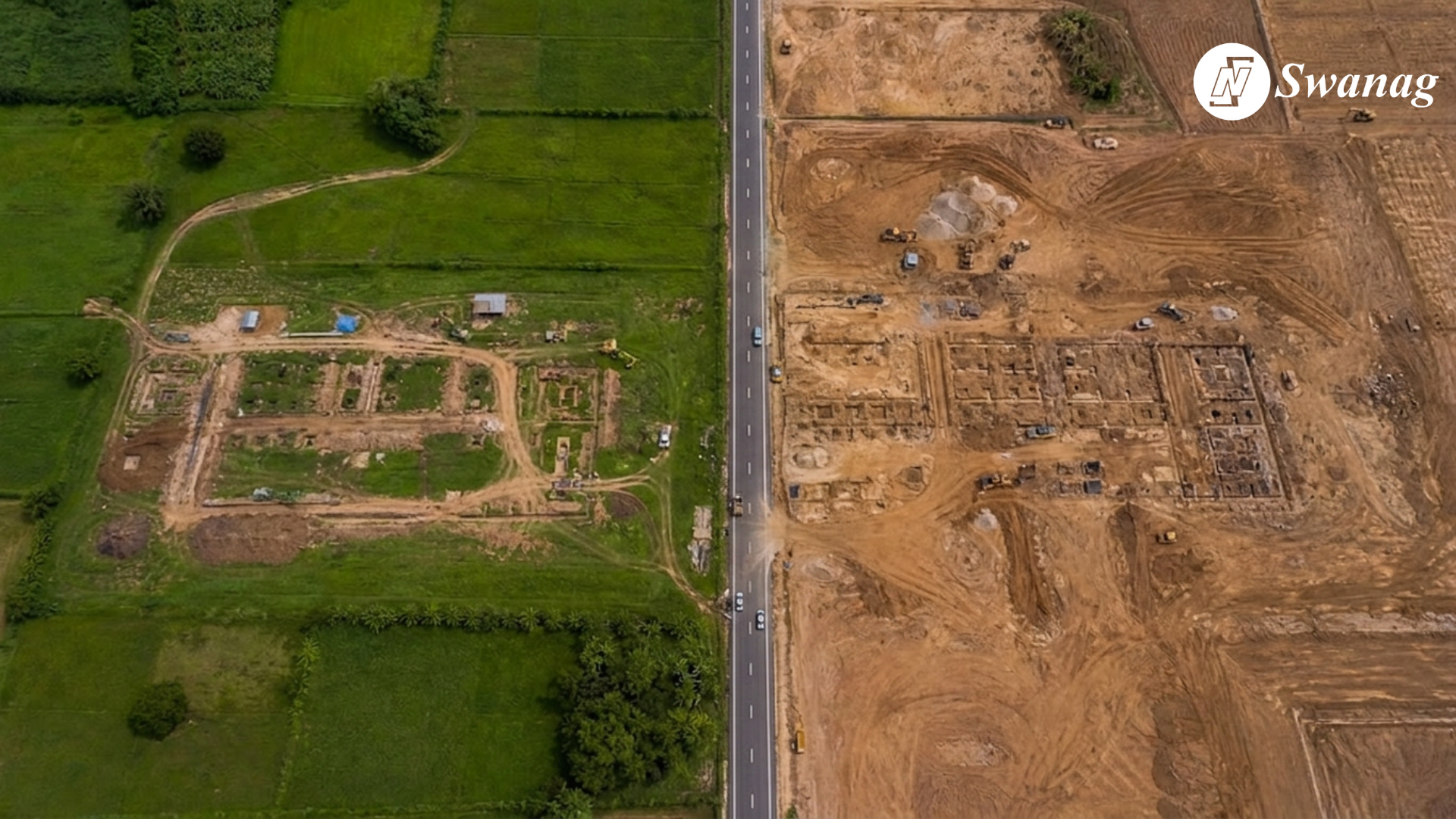
In industrial infrastructure development, one of the most important decisions is whether to build a completely new facility from scratch or upgrade an existing one. This distinction forms the core of greenfield vs brownfield construction.
Both approaches are widely used across manufacturing, engineering, and heavy industry. Neither is universally better. The right choice ultimately depends on operational needs, investment capacity, timelines, and long-term business strategy.
At Swanag Infrastructures, we work across both models, delivering industrial projects that balance engineering precision, safety, and real-world execution challenges.
Key Differences: Greenfield Vs Brownfield Projects
Greenfield Vs Brownfield: A Quick Comparison Guide
| Factor | Greenfield Projects | Brownfield Projects |
| Definition | Building a new facility from scratch on undeveloped land | Upgrading or expanding an existing industrial facility |
| Initial Cost | High due to complete infrastructure development | Lower compared to new builds, but can vary based on upgrades |
| Project Timeline | Longer due to full planning and construction | Shorter as core infrastructure already exists |
| Design Flexibility | Very high; full freedom in layout and systems | Limited due to existing structures and constraints |
| Operational Disruption | No existing operations, so no disruption | Possible disruption during upgrades or integration |
| Scalability | High; future expansion can be planned from the start | Moderate; depends on existing facility limitations |
| Risk Level | Lower legacy risk, but higher planning uncertainty | Higher due to hidden structural or system issues |
| Regulatory Approvals | Requires full environmental and land approvals | Often faster but may include remediation compliance |
| Environmental Impact | New land use may require impact assessments | Focus on remediation and reuse of existing land |
| Best Suited For | Long-term industrial expansion and modern plants | Fast upgrades, capacity expansion, and cost optimization |
Greenfield Construction: Definition, Advantages, and Challenges
What is a Greenfield Project?
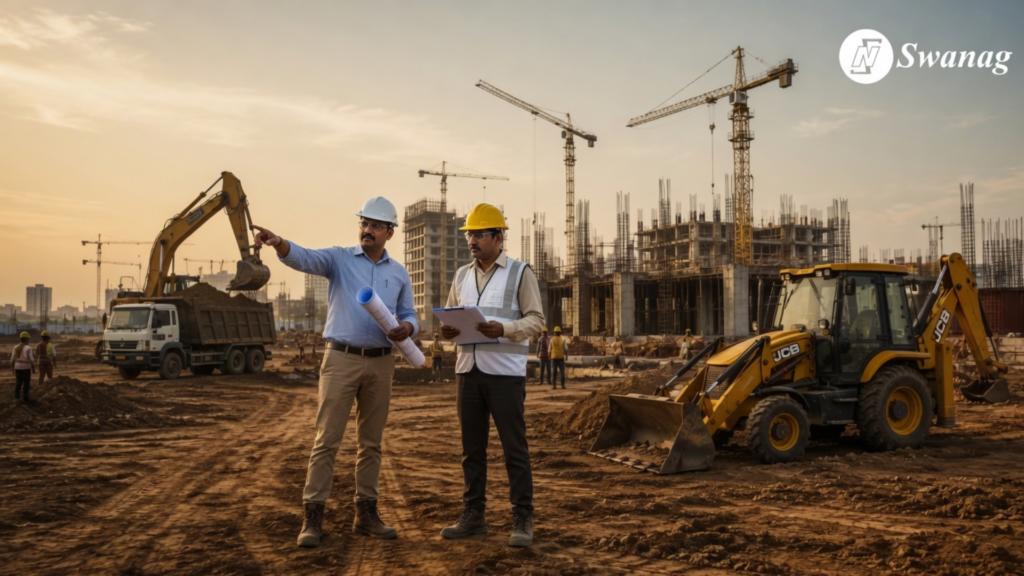
A greenfield project starts on completely undeveloped land where no prior infrastructure exists. Everything is built from scratch, including plant layout, utilities, production systems, and supporting infrastructure. This makes it the most flexible form of industrial development, but also one of the most demanding in terms of planning and investment.
Advantages of Greenfield Projects
- Design Freedom
The key advantage of greenfield construction is complete design freedom. Without legacy systems or physical constraints, the facility can be engineered for optimal efficiency from day one. This also enables seamless integration of modern technologies such as automation, digital monitoring systems, and smart industrial controls. - Scalability
Another major advantage is scalability. Since the layout is designed from the ground up, future expansion can be built into the planning stage itself. This is why greenfield projects are often aligned with long-term industrial growth strategies.
Challenges Facing Greenfield Projects
- Higher Initial Investment
Greenfield projects require higher initial investment and longer execution timelines. Every component must be developed from the ground up, which increases planning complexity. - Revenue Generation Delays and Other Uncertainties
There is also greater early-stage uncertainty, as no existing operational benchmark is available. Revenue generation begins only after full commissioning, extending the return cycle.
Brownfield Construction: Definition, Advantages, and Challenges
What is a Brownfield Project?
A brownfield project focuses on upgrading, expanding, or modifying an existing facility while keeping operations active. Instead of starting fresh, the objective is to improve and optimize existing infrastructure.
Advantages of Brownfield Projects
- Speed
One of the biggest advantages is speed. Since core infrastructure already exists, execution timelines are generally shorter. Capital requirements are also typically lower compared to a new build. - Operational Continuity
Operational continuity is another key benefit. In most cases, production continues during upgrades, ensuring revenue flow is maintained throughout execution. - Lesser Red Tape
Brownfield projects also benefit from established ecosystems—existing workforce, supplier networks, and operational processes. Approvals can also be more straightforward since the site is already industrially active.
Challenges Facing Brownfield Projects
- Limited Design Flexibility
Design flexibility is limited, as new systems must integrate with existing infrastructure. This often introduces engineering complexity. - Hidden Risks of Existing Structures
There is also the risk of hidden issues. Older facilities may reveal structural limitations, outdated systems, or environmental concerns only after work begins. In some cases, legacy sites may also carry remediation responsibilities. - Maintenance Challenges
Integrating old and new systems can create long-term maintenance challenges, requiring careful coordination and phased implementation.
Environmental Sustainability: Greenfield Vs Brownfield Construction
Environmental factors now play a central role in decisions involving construction projects. Brownfield projects often face scrutiny around contamination risks and remediation costs, particularly in older industrial zones. Greenfield projects, meanwhile, must comply with environmental impact assessments from the outset, including land use, emissions, and resource planning.
As a result, sustainability is no longer a secondary consideration but a core design parameter.
This shift is driving investment toward sectors such as renewable energy, electric vehicles, battery manufacturing, and sustainable industrial infrastructure. Globally, industries are prioritising cleaner energy access and long-term environmental efficiency in site selection.
Swanag Infrastructure Project Experience
On the ground, greenfield and brownfield execution are completely different experiences.
At Swanag Infrastructure, we have worked on both types, and the execution approach changes completely based on site conditions.
Our brownfield projects include Tube Products of India in Thane, Shibbor Machines in Chembarambakkam, and Intraatch Phase 2 expansion. These were live industrial sites, so the biggest priority was simple. Keep operations running while upgrading systems safely and without downtime.
On the greenfield side, we have delivered Century Plywood Industrial Facility, Southern Alloy Foundries, and Intra Industrial Project in Ativaram, Andhra Pradesh. These started from empty land and were gradually developed into fully functional industrial facilities through structured execution planning.
Choosing the Right Approach: Greenfield Vs Brownfield Construction
In industrial development, the real question is not about greenfield vs brownfield construction, but which one is right for the specific context.
Greenfield Construction is best suited for long-term expansion, modern infrastructure, and complete design control. Brownfield Construction is ideal when speed, cost efficiency, and operational continuity are priorities.
Both approaches serve distinct industrial needs. Both approaches solve different problems. Their success depends less on the model itself and more on how well they are executed on the ground.
At Swanag Infrastructures, both are delivered with the same focus on engineering precision, safety, and reliable project execution.
Frequently Asked Questions (FAQs)
Greenfield construction builds a new facility from scratch on undeveloped land. Brownfield construction upgrades or expands an existing industrial facility.
Yes. Brownfield construction is environmentally safe when proper site assessment and remediation are done. It is often more sustainable because it reuses existing industrial land instead of using new land.
Brownfield construction offers faster execution, lower initial investment, and operational continuity since existing facilities can remain active during upgrades.
Greenfield construction has higher costs, longer timelines, and no existing infrastructure, which increases planning complexity and delays operational startup.
Brownfield is better for quick expansion and cost efficiency. Greenfield is better for long-term growth and fully customised facility design.
Companies choose based on budget, timeline, existing infrastructure, scalability needs, risk tolerance, and long-term business strategy.
Yes. Swanag Infrastructures delivers both greenfield and brownfield construction projects, including new facility development and upgrades of existing plants, with a focus on engineering precision, safety, and reliable execution.
