
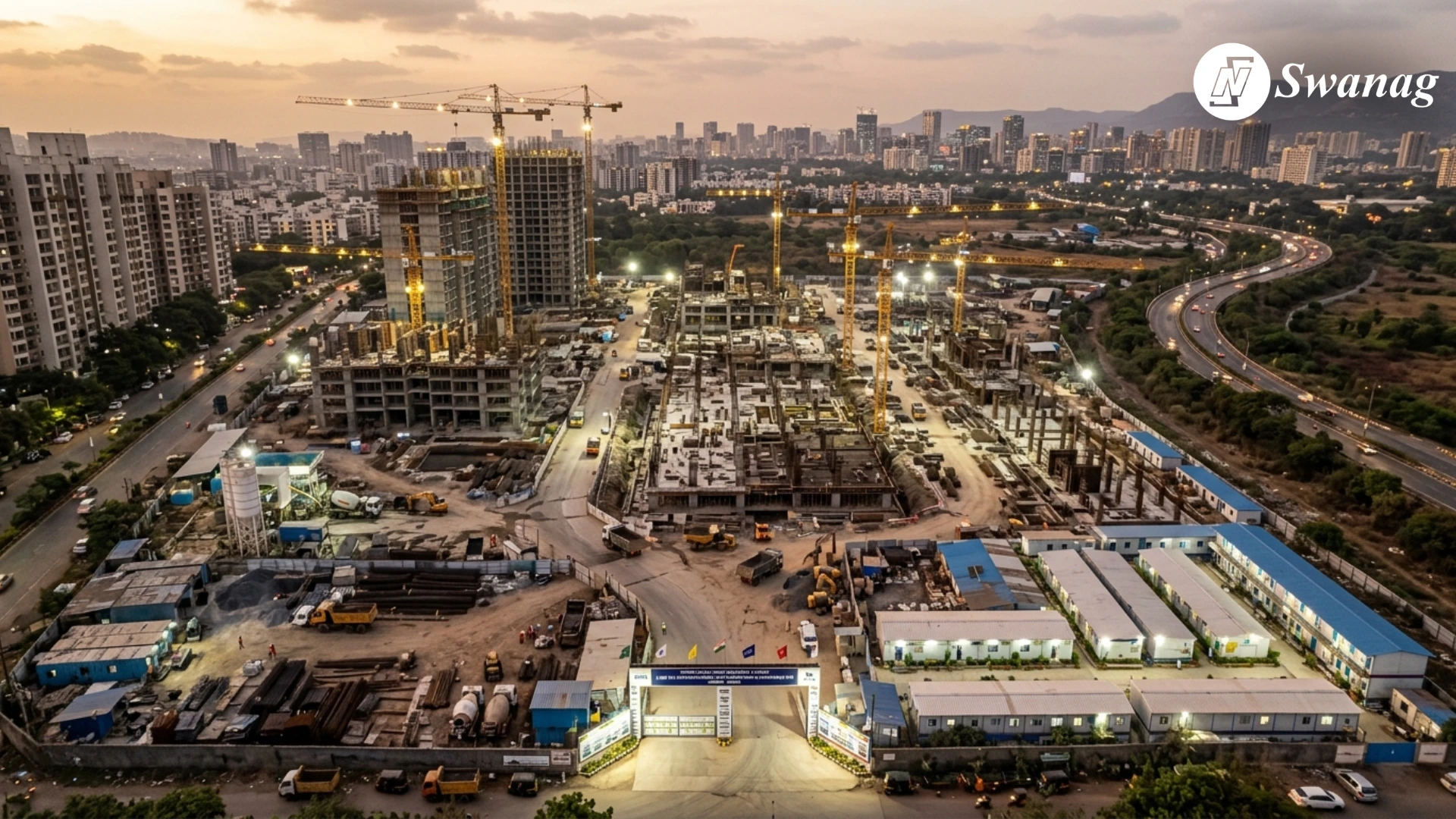
AI in Civil Engineering
Construction is evolving at a rapid pace, and traditional decision-making is struggling to keep up. That is exactly where Artificial Intelligence (AI) in Civil Engineering is starting to make an impact.
AI is simply a tool that imitates aspects of human thinking. It analyses data and identifies patterns to help solve real problems on the ground. While AI itself is not new, what has changed is how widely it is being used. In recent years, access to large-scale data has made it far more practical and effective across industries.
We are already seeing AI being used across different areas of construction, which is completely understandable. The industry has always dealt with delays, rising costs, safety risks, and tight deadlines. As projects grow bigger and more complex, the need for faster and more reliable decision-making continues to increase
Applications of AI in Civil Engineering
In order to optimise workflows and reduce manual effort, AI is being used in a few key areas.
- Risk management: One major area of application is risk management. By analysing data such as schedules, weather, and procurement timelines, AI helps engineers spot risks earlier. For example, if material deliveries have been delayed in similar projects before, it can flag the delay so engineers can act in time.
- Design and planning: With AI, engineers can compare more design options in less time. This becomes especially useful in early planning, allowing engineers to make better-informed decisions and reduce the risk of costly changes that would otherwise come up later during construction.
- Execution and monitoring: Another important application lies in progress tracking. AI can compare planned work with actual site activity. Drone footage and site images can also be used to check progress and spot delays sooner.
- Safety and inspection: Cameras, drones, and image recognition are used to monitor site safety and detect issues. Issues like missing safety gear, cracks, or uneven work can be identified even during routine inspections.
- Sustainability: Helps reduce material waste by improving planning, and it can also optimise transport routes, reducing unnecessary material use and movement.
We see that companies are exploring these capabilities. For instance, software platforms such as Autodesk and Bentley Systems are already integrating AI features that support design reviews and project analysis within real workflows. At the same time, large contractors are experimenting with AI to track project progress, detect risks earlier, and improve decision-making on-site
Will AI Replace Engineers?
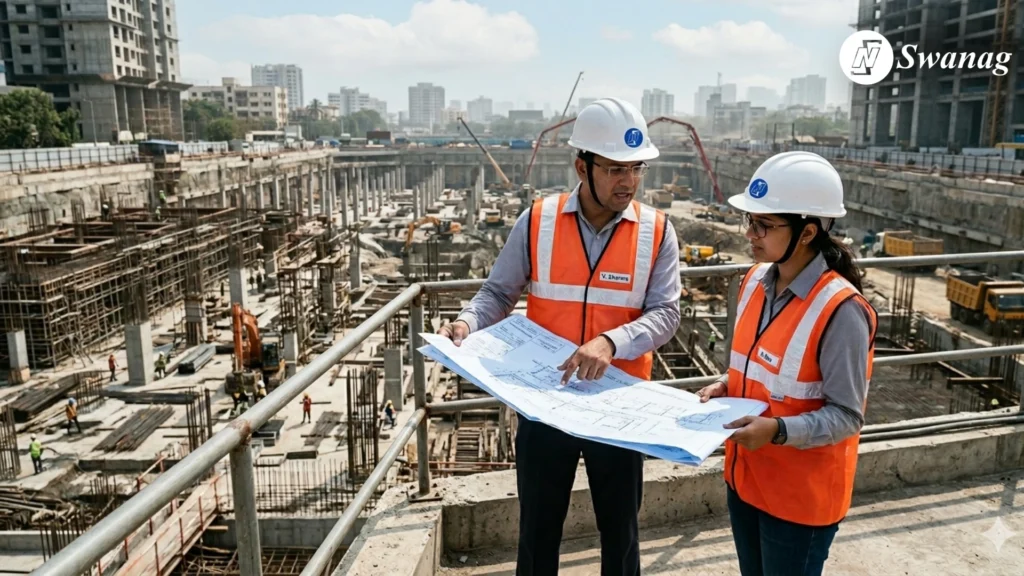
There is a lot of discussion about whether AI will replace engineers. It is a valid concern given how fast AI is evolving. However, full replacement still does not appear likely in the near future.
AI is powerful because it can process huge amounts of data. Its strength is also its own weakness. It can generate outputs that appear accurate, but they do not always match what actually happens on construction sites.
Engineering goes beyond just data and patterns. It relies on judgment, experience, and an understanding of how things work in the real world, where conditions are rarely predictable. That is why AI cannot be trusted blindly. Its output needs to be verified and weighed against human judgment before it is used to make critical decisions in real time.
Why Human Engineers Still Matter Most
No matter how advanced AI systems become, real projects will not always go as planned. There can be unexpected delays, unforeseen challenges, and a need to make quick, on-the-spot decisions that require thinking on one’s feet. That is where engineers are essential.
What makes humans stand out from AI is not just technical skill, but their people skills. Their ability to think, communicate, adapt, and take responsibility when things don’t go as planned.
The future is unlikely to be AI versus engineers. In the end, the future of civil engineering will belong to those who learn to work with AI, not against it.
FAQ
AI is used in civil engineering for design optimization, project planning, risk prediction, construction monitoring, safety inspection, and resource management.
No, AI is not expected to fully replace civil engineers because engineering requires human judgment, experience, and real-world decision-making that AI cannot replicate.
AI is used to predict delays, improve design choices, track construction progress, enhance site safety, and reduce material waste through better planning.
Yes, AI is already used in civil engineering through tools and platforms like Autodesk and Bentley Systems for design analysis, planning, and project management.
AI is limited by its dependence on data. It may generate outputs that do not fully reflect real-world site conditions, unexpected challenges, or human judgment.
AI will mainly assist engineers by improving efficiency and decision-making rather than replacing them entirely.
Civil engineers will need technical knowledge, problem-solving ability, adaptability, communication skills, and the ability to effectively use AI tools.
