
Prevent Heat Stress: Protect Workers’ Health on Construction Sites
Heat stress is a serious concern across many sectors, from construction and agriculture to manufacturing and logistics. Long hours under high temperatures and humidity can affect anyone working in physically demanding conditions or poorly ventilated spaces.
On construction sites, laborers are constantly moving between tasks: carrying cement crates, handling steel beams, operating cranes, hammering nails, and patching surfaces. The work is physically demanding, and long hours under the sun make heat stress a serious occupational hazard that affects both the health and productivity of workers.
What is Heat Stress?
Heat stress occurs when the body cannot cool itself properly under extreme heat, high humidity, or heavy physical work. It can lead to heat-related illnesses like heat exhaustion and heat stroke, which compromise both the health and productivity of construction workers.
It often worsens during prolonged periods of high temperatures, commonly known as heat waves. During these times, the body has less time to recover between shifts, increasing the risk of serious health issues.
Major Causes of Heat Stress
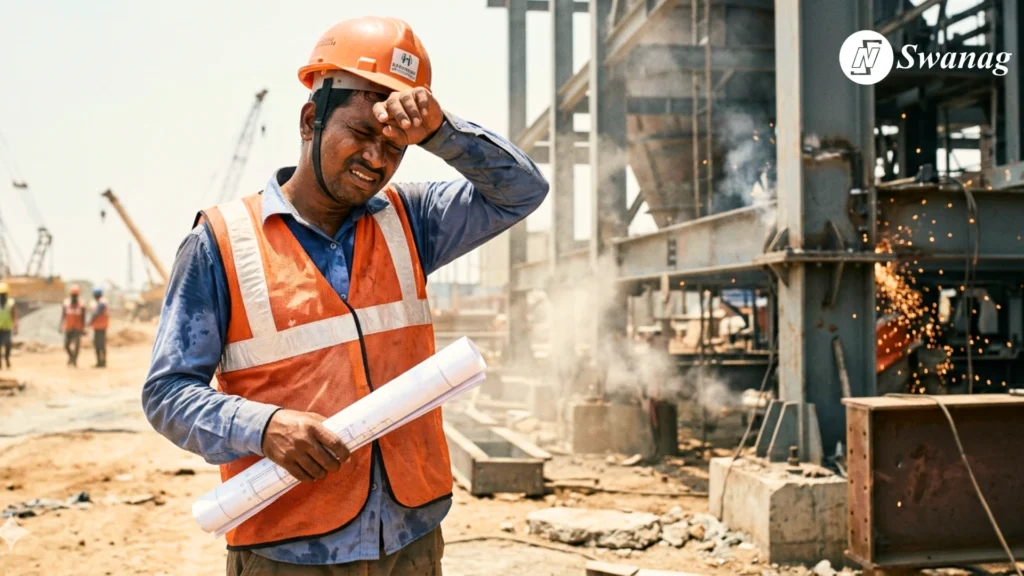
Heat stress arises from a combination of environmental and workplace factors.
Environmental Factors
- Heat Waves: Prolonged periods of unusually high temperatures reduce the body’s ability to recover between shifts, increasing the risk of heat-related illnesses.
- Urban Heat Island Effect: Cities trap heat due to concrete, asphalt, and dense infrastructure, keeping nights warmer and reducing relief from daytime heat. Urban construction workers are particularly vulnerable.
Construction Site Factors
- High temperatures under direct sunlight
- Physically demanding work like lifting, carrying, or operating machinery
- Dehydration from insufficient water intake
- Heat-trapping PPE such as helmets, gloves, or safety vests
- High humidity, which reduces the body’s ability to cool naturally
- Long working hours without adequate breaks
How Heat Stress Affects Construction Workers’ Productivity
It reduces energy, focus, and efficiency, leading to slower work and more frequent breaks. According to the International Labour Organization (ILO), over 70% of global workers face heat exposure risks. India loses an estimated $100 billion in productivity due to heat-related work slowdowns and absenteeism.
For construction projects, this translates to slower progress, higher risk of errors, and increased safety hazards. Addressing heat stress is therefore critical for both worker safety and maintaining consistent productivity.
Precautions and Safety Measures
To protect construction workers from heat stress:
- Hydration and scheduled breaks – provide frequent water breaks and short rest periods
- Shaded rest areas – allow workers to cool down between tasks
- Heat-appropriate PPE – lightweight clothing, helmets with sun protection, UV-safe glasses
- Monitoring workers – watch for early signs of heat exhaustion or heat stroke
- First-aid response – know how to respond if a worker shows symptoms of heat-related illness
Conclusion
At Swanag Infrastructures, workers’ health and well-being come first. By ensuring regular hydration, scheduled breaks, shaded rest areas, heat-friendly PPE, and monitoring for early signs of heat illness, Swanag not only supports its workforce but also meets stringent HSE compliance standards.
Build stress – free with Swanag !
Frequently Asked Questions (FAQs)
Heat stress occurs when the body cannot cool itself properly due to high temperatures, humidity, physical exertion, or protective clothing. It can lead to heat exhaustion or heat stroke, affecting workers’ health and productivity.
Environmental factors like heat waves and the urban heat island effect, as well as workplace factors including high temperatures, heavy physical work, dehydration, heat-trapping PPE, humidity, and long working hours.
Heat waves reduce the body’s ability to recover between shifts, increasing fatigue, dehydration, and the risk of heat-related illnesses.
Cities trap heat due to concrete, asphalt, and dense infrastructure, keeping nights warmer and reducing relief from daytime heat. This makes urban construction workers particularly vulnerable.
It lowers energy, focus, and efficiency, resulting in slower work, more frequent breaks, and higher chances of errors or accidents.
Workers should stay hydrated, take regular breaks in shaded areas, wear heat-appropriate PPE, monitor for early signs of heat illness, and have access to first-aid measures.
