
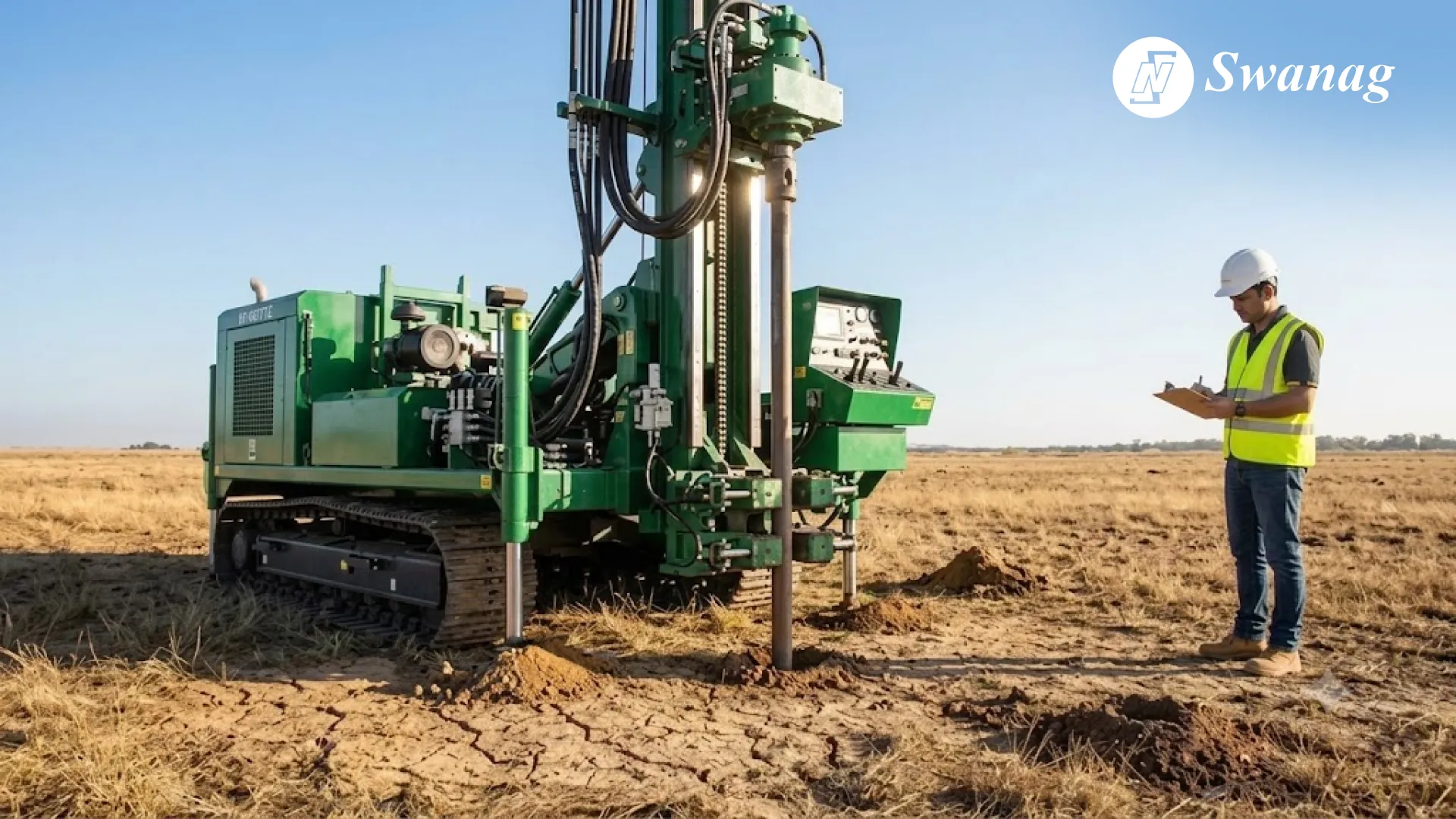
Soil Investigation for Industrial Projects: Why It Is Essential Before Construction
Before an industrial project moves into construction, a thorough soil investigation is essential to give the engineering team a clear understanding of site ground conditions.
What type of soil is present? How strong is it? Where is the groundwater table? Will the soil support the proposed loads without excessive settlement? These are some of the basic questions that need to be answered before the foundation design is finalised.
A proper soil investigation helps answer these questions and gives the design team a basis for deciding the foundation system and other ground-related works.
For an EPC contractor, the investigation is not limited to geotechnical design. Its findings are used by civil, structural, construction, equipment and other teams during engineering and execution. Foundation design, excavation, dewatering, piling, ground improvement and equipment foundations can all depend on the conditions below the surface.
This matters even more on industrial projects because a single site may have process equipment, storage tanks, pipe racks, buildings, roads and large floor slabs. The soil conditions may not be the same below all of them.
What is soil investigation?
Soil investigation is carried out to understand the soil and groundwater conditions below a construction site and determine their engineering properties.
The investigation usually involves field work, laboratory testing and geotechnical analysis.
Depending on the project, it can include:
- Borehole drilling
- Standard Penetration Tests
- Soil and rock sampling
- Groundwater observations
- Cone Penetration Testing
- Plate load testing
- Grain size analysis
- Atterberg limits
- Shear strength testing
- Consolidation testing
- Free swell testing for expansive soils
- Chemical testing of soil and groundwater
- Geotechnical calculations and recommendations
The scope is decided based on the site conditions, proposed structures, expected loads and applicable standards.
Why is soil investigation important for an EPC project?
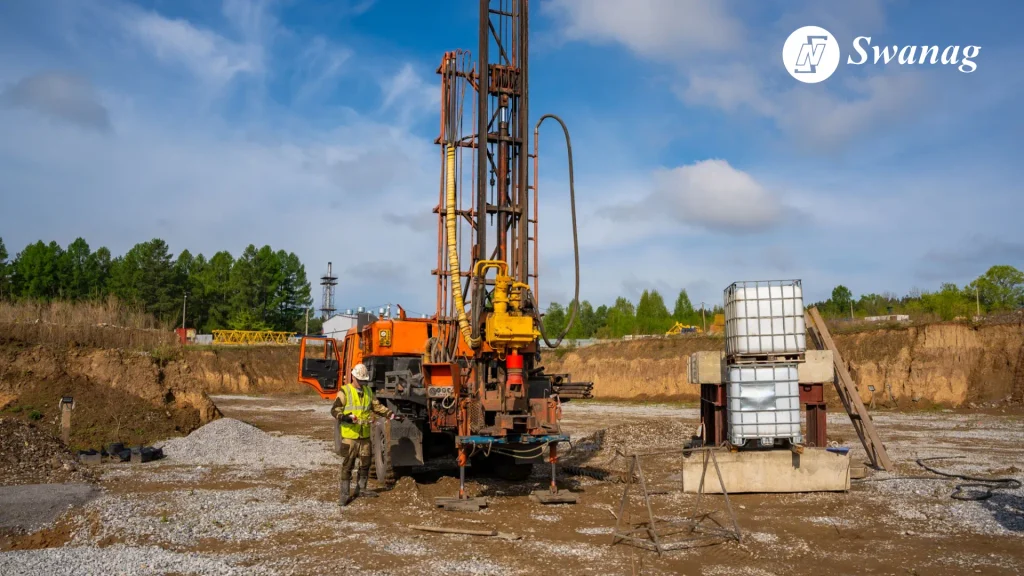
On an EPC project, the findings of the soil investigation are used by different teams as the work moves from engineering to construction.
- Structural design team: They use the soil parameters to decide the foundation type, size and depth. Bearing capacity is one consideration, but settlement and soil strength also need to be checked.
- Civil engineering team: Soil and groundwater conditions are important when planning excavation, dewatering, retaining systems and other civil works.
- Construction team: The investigation gives an indication of what may be encountered below ground. Soft soil, groundwater or the need for ground improvement can have a direct impact on the construction method.
- Equipment team: Compressors, turbines, pumps and DG sets have specific foundation requirements. The soil has to be considered along with equipment loads and vibration.
- Process and piping team: Differential settlement between connected foundations can affect piping, supports and equipment alignment.
- Procurement team: If piling, ground improvement, dewatering or special excavation methods are likely to be needed, these requirements can be identified during engineering and included in the project planning.
The findings therefore give the different teams working on the project a common understanding of the ground conditions as they develop the design and construction plan.
What tests are commonly used in soil investigation?
Different tests are carried out because no single test can give a complete picture of the ground. The Standard Penetration Test (SPT) is one of the most commonly used in-situ tests in India. It gives an indication of soil resistance at different depths and is generally considered along with the soil profile, groundwater conditions and laboratory results.
Cone Penetration Testing (CPT) gives a more continuous profile and can be useful for identifying changes in soil and weaker layers, especially in soft or variable ground. A plate load test is used to study the load-settlement behaviour of the ground at a particular location. The results from these tests need to be interpreted based on the actual foundation and site conditions rather than looking at one test value alone.
What soil conditions matter for industrial foundations?
For industrial foundations, bearing capacity is only one part of the design. How the soil behaves after the load is applied is also important. Settlement can be a concern for equipment and structures that have limited tolerance for movement. Differential settlement is especially important because even a small difference between connected foundations can affect equipment alignment, crane rails, piping and supports.
Machine foundations also need separate consideration. Compressors, turbines, pumps, DG sets, crushers and presses can produce dynamic loads and vibration during operation. The foundation and the supporting soil need to be considered together, and dynamic analysis may be required depending on the equipment and project requirements. The chemical condition of the soil and groundwater can also matter, as sulphates and chlorides can affect concrete and reinforcement under certain conditions.
How does soil investigation help reduce EPC project risk?
Ground conditions are one of the things that cannot be fully understood just by looking at the site surface. We need to dig deeper. A detailed investigation helps identify issues such as weak soil, high groundwater, the need for piling or ground improvement and difficulties that may arise during excavation.
If these conditions are discovered after foundations have been laid, corrective work can be very difficult. This may involve additional excavation, piling, ground improvement or redesign. If equipment has already been installed, access and shutdown requirements can make the work more complicated.
Soil investigation supports better engineering decisions
Soil investigation is more than checking whether the soil can carry the proposed load. It gives the project team a better understanding of what is below the site and how the ground is expected to behave under the proposed structures and equipment.
This helps the team plan the foundation and construction work based on the actual ground conditions.
Frequently Asked Questions
Soil investigation is the process of studying the soil and groundwater conditions at a site before construction. It helps determine properties such as soil strength, bearing capacity, settlement characteristics and groundwater levels. This information helps in deciding the suitable foundation system and planning other ground-related works.
A soil investigation can include borehole drilling, soil and rock sampling, Standard Penetration Tests, groundwater observations and laboratory testing. Based on the site conditions and project requirements, tests such as Cone Penetration Testing, plate load testing, shear strength testing and consolidation testing may also be carried out.
Soil conditions can vary significantly from one site to another and even within the same site. A soil investigation gives the engineering team information about what is below the ground before foundation and construction work begins. This helps in selecting the foundation system and identifying issues such as weak soil, groundwater or the need for piling or ground improvement.
The tests depend on the site and the type of structures planned. Standard Penetration Testing (SPT) is commonly used to assess soil resistance at different depths. Cone Penetration Testing (CPT), plate load tests, soil sampling and laboratory tests for properties such as grain size, shear strength and consolidation may also be used.
If the ground conditions are not properly understood, problems can arise during foundation construction or later during operation. These may include unexpected soft soil, high groundwater, excessive settlement, foundation changes, additional piling or ground improvement. Such issues can also affect construction methods, equipment installation and project schedules.
Groundwater can affect excavation, foundation construction and the behaviour of certain soils. A high groundwater table may require dewatering during construction and can also influence foundation design. Knowing the groundwater conditions in advance allows the team to plan excavation, dewatering and foundation work accordingly.
Yes. A detailed soil investigation can identify ground-related issues before construction begins. If weak soil, groundwater or other difficult conditions are found early, the foundation design and construction method can be planned accordingly. This can reduce the need for changes after construction has started and help avoid additional work and delays.