
Abrams Cone Slump Test: Procedure, Types and Importance in Concrete Work
A slump test is a simple field test used to check the consistency of fresh concrete. It shows how much the concrete settles after the slump cone is lifted. The Abrams cone slump test is one of the most widely used methods. Other methods and equipment, such as the K-slump tester, Vebe apparatus and compacting factor apparatus, may also be used depending on the type of concrete and the applicable testing requirements.
What Is the Abrams Cone Slump Test?
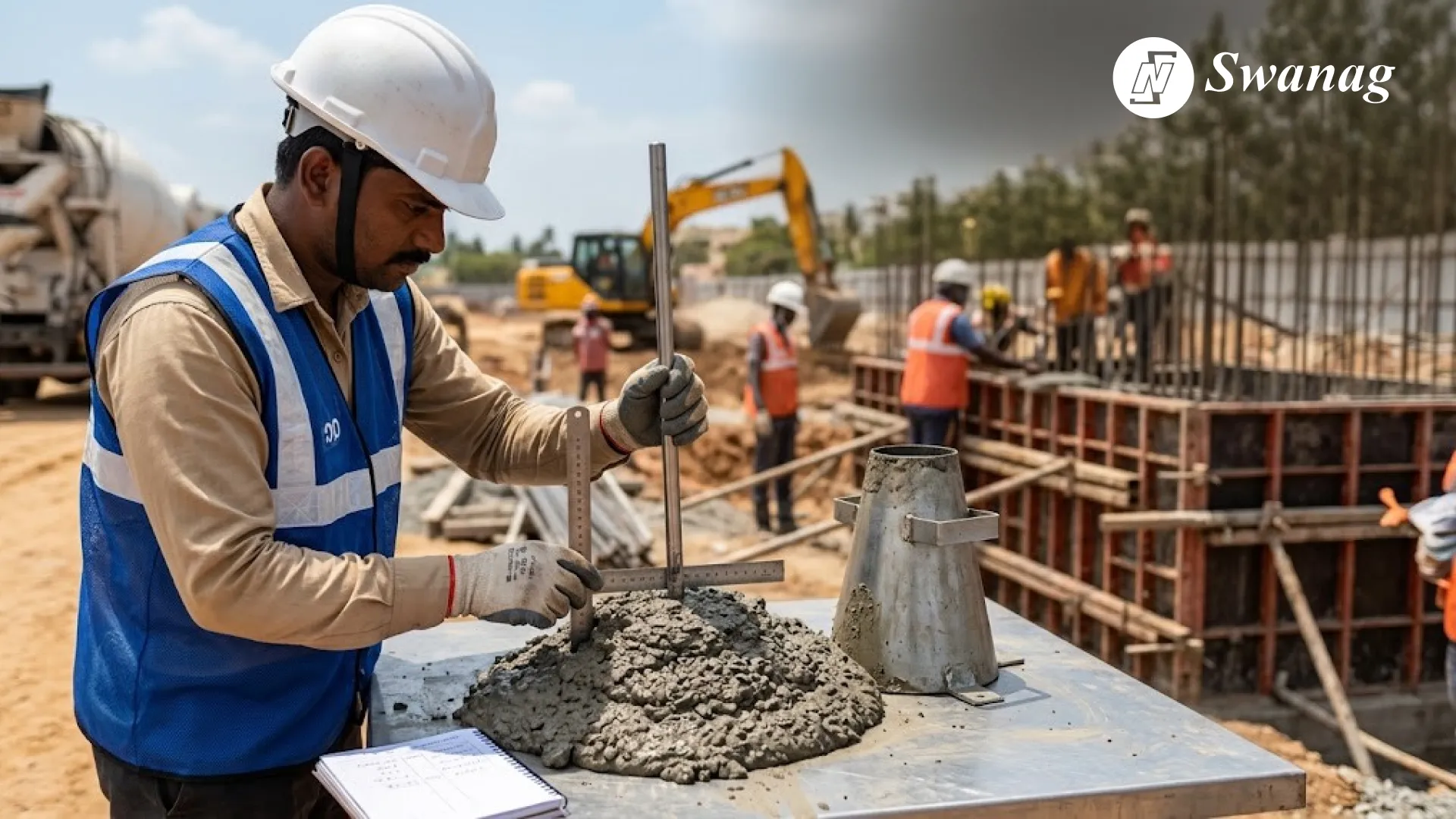
An Abrams cone, also called a slump cone, is filled with concrete and compacted according to the applicable testing procedure.
Once the cone is lifted, the difference between the original height and the settled height is measured in millimetres. This is recorded as the slump value.
The reading is only as good as the test. Factors like poor sampling, improper compaction or incorrect handling of the cone can affect the test result.
For projects in India, IS 1199: Part 2: 2018 covers methods for determining the consistency of fresh concrete, including the slump test. ASTM C143/C143M is another widely used standard for determining concrete slump. The test should be carried out according to the relevant standard.
How Is the Abrams Cone Slump Test Performed?
The procedure is as follows:
- Place the cone: Keep the Abrams cone on a firm, level and clean surface.
- Fill the cone: Take the sample of fresh concrete and fill the cone as required by the applicable standard.
- Compact the concrete: Compact each layer properly using the specified procedure.
- Strike off the top: Remove the excess concrete and level the surface with the top of the cone.
- Lift the cone: Raise it vertically and steadily without twisting or disturbing the concrete.
- Measure the slump: Measure the difference between the original height and the height of the concrete after it settles.
The slump value should be checked against the approved mix and the required slump. If concrete keeps arriving outside the approved slump range, the engineer has to find out what is causing the variation.
Water added on site needs particular attention. It can increase the slump, but it can also affect the designed properties of the concrete. If workability needs to be adjusted, it should be done as permitted by the approved mix and project procedure.
Admixtures, aggregate characteristics, temperature and the time between mixing and testing can also affect the test result. The slump reading also has to be looked at along with the mix design and the conditions during testing.
The right slump depends on where the concrete is going and how it will be placed. Concrete being pumped into a heavily reinforced structural member may need different workability from concrete used elsewhere. The approved mix design and project specifications determine what is acceptable.
What Do Different Slump Results Mean?
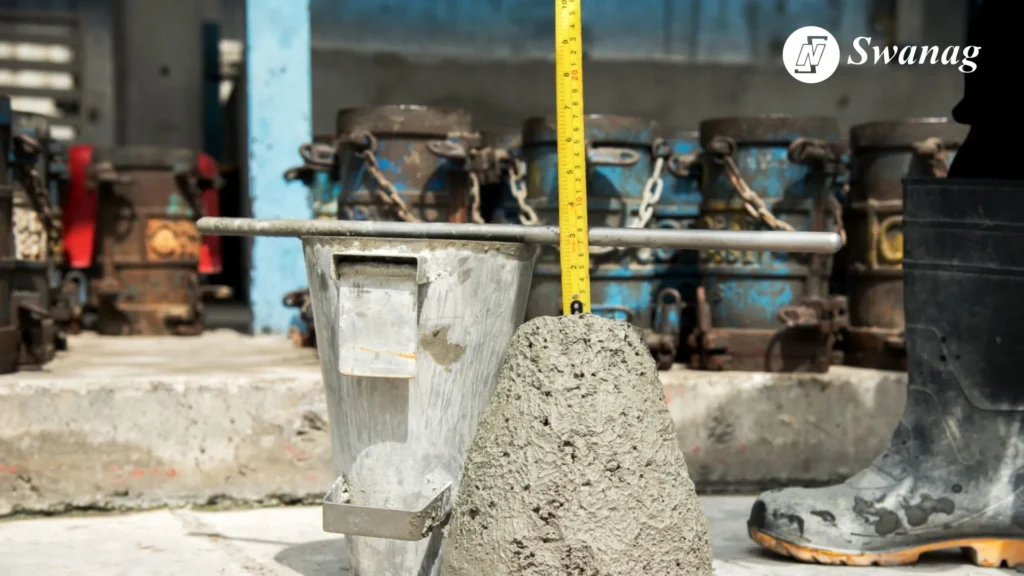
It is important to look at how the concrete settles after the cone is removed.
A true slump is when the concrete settles evenly while largely retaining its shape. This is the normal result expected from the conventional test.
In a shear slump, the concrete slips to one side instead of settling evenly. The test should be repeated as required by the applicable procedure.
A collapse slump is when the concrete loses its shape and spreads out after the cone is removed. This usually indicates very high workability, and the conventional slump test may not provide a meaningful reading in such cases.
A single slump reading does not show why the concrete is behaving differently.
A higher slump does not necessarily mean better concrete. What matters is whether the concrete meets the specified requirements and has enough workability for the job.
Frequently Asked Questions About the Abrams Cone Slump Test
A slump test measures how much fresh concrete settles after the slump cone is removed. It is used as a quick check of the concrete’s consistency.
It is used to measure the slump of fresh concrete and check whether it is within the specified range for the intended application.
Fresh concrete is placed and compacted in an Abrams cone. The cone is lifted vertically, and the change in height is measured as the slump.
The three common types are true slump, shear slump and collapse slump, based on how the concrete settles after the cone is removed.
A higher slump generally indicates greater workability, but the value still needs to be suitable for the specified mix and application.
A slump test checks fresh concrete, while a strength test determines the compressive strength of hardened concrete.
It helps identify variations in fresh concrete before it is placed, giving the site team a chance to check the mix against the specified requirements.
In India, IS 1199: Part 2: 2018 covers the consistency of fresh concrete, including the slump test. ASTM C143/C143M provides another standard method for determining concrete slump. The test should be carried out according to the relevant standard.