
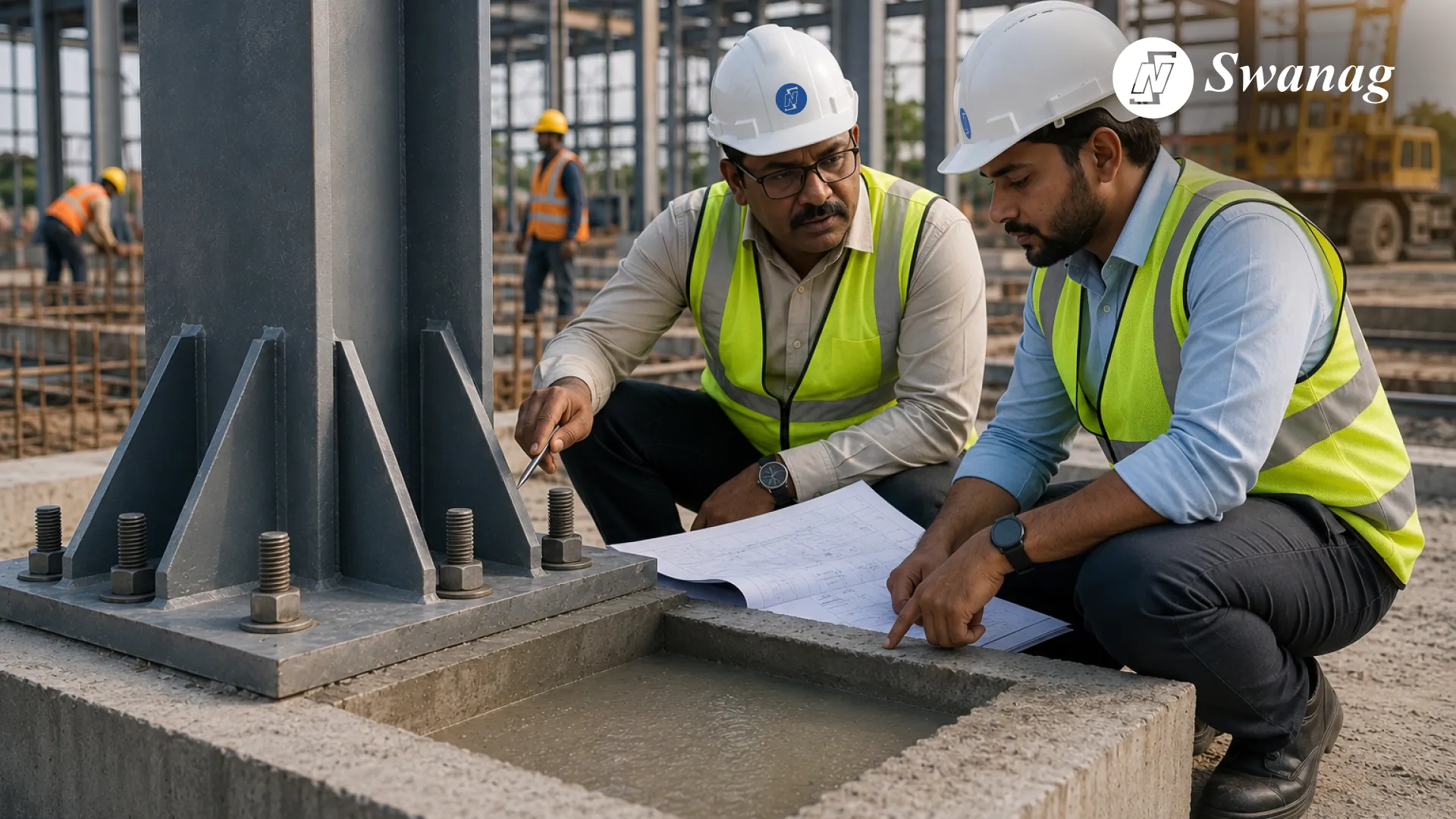
Why Is Grouting Important in Industrial Construction?
When heavy equipment is installed in an industrial plant, its performance depends on how well it is supported by the foundation.
During operation, equipment such as pumps, compressors, turbines, and motors is constantly exposed to loads and vibration. If gaps are left beneath the base plate, the loads may not be transferred properly to the foundation. Over time, this can lead to alignment problems, vibration, and maintenance issues.
In practice, many equipment issues can be traced back to poor installation and grouting work. This is why non-shrink grout is commonly used below equipment base plates. It provides support beneath the equipment and helps transfer loads evenly to the foundation.
What Is Grouting?
Grouting is the process of filling the gap between an equipment base plate and the concrete foundation using a flowable material called grout.
In industrial applications, grout is not just used as a filler. It provides uniform support below the equipment base and helps transfer operating loads safely to the foundation.
What Are the Types of Grout Used in Industrial Construction?
Different types of grout are available for different equipment, operating conditions, and project requirements.
-
Cementitious Grout
Cementitious grout is made from cement, fine aggregates, and special additives. It is generally used for filling voids, precast concrete connections, and other general construction applications. -
Epoxy Grout
Epoxy grout provides high strength, good chemical resistance, and excellent performance under vibration. It is often preferred for critical equipment and demanding service conditions. -
Chemical-Resistant Grout
Chemical-resistant grout is designed for areas exposed to aggressive chemicals that can affect conventional cement-based materials. It is commonly found in chemical and process industries. -
Non-Shrink Grout
It is the preferred grout for most industrial equipment foundations. It maintains its volume after curing, providing continuous support between the equipment base plate and the foundation.
Why Is Non-Shrink Grout Preferred for Industrial Applications?
It is preferred for industrial applications because it maintains its volume after curing and ensures proper contact between the equipment base plate and the foundation.
Unlike conventional cement-based grout, it does not leave gaps due to shrinkage, helping maintain the stability of the installation over time. This makes it a reliable choice for industrial equipment installations.
What Are the Applications of Non-Shrink Grout in Industrial Projects?
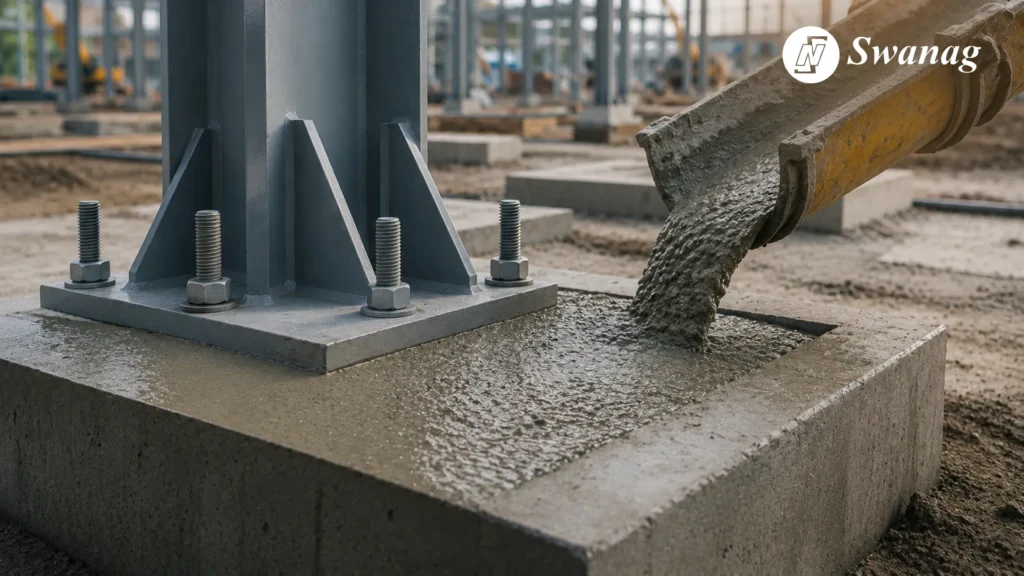
Non-Shrink Grout is used wherever equipment or structural elements require solid support from the foundation.
-
Equipment Foundations in Non-Shrink Grout
It is used beneath the base plates of pumps, compressors, turbines, motors, and other rotating equipment to provide solid support and effective load transfer. -
Machine Foundations
Heavy machinery generates considerable loads and vibration during operation. Grouting allows these loads to be transferred evenly to the foundation. -
Anchor Bolt Connections
It is also placed around anchor bolts to fill gaps and provide support for equipment and structural components. -
Steel Structure Base Plates
Grouting beneath steel column base plates helps achieve full contact with the foundation and improves the stability of the connection.
Where Is Non-Shrink Grout Commonly Used?
It is grout is widely used in:
- Power plants
- Cement plants
- Steel plants
- Oil and gas facilities
- Chemical processing industries
- Heavy manufacturing plants
What Are the Benefits of Non-Shrink Grout?
-
Better Load Transfer
Provides stability for the equipment beneath the base plate and ensures equipment loads are transferred evenly to the foundation. -
Reduced Movement and Vibration
Fills gaps beneath the equipment, reducing unwanted movement and vibration during operation. -
Prevents Gaps After Curing
Maintains its volume after curing, preventing the formation of gaps beneath the equipment. -
Improved Equipment Reliability
Provides stable support for the equipment and contributes to reliable long-term operation.
What Are the Best Practices for Non-Shrink Grouting?
-
Surface Preparation
The foundation surface should be clean and free from dust, oil, loose particles, and other contaminants before grouting begins. -
Equipment Alignment
Equipment alignment should be checked and confirmed before grout placement, as adjustments become difficult once the grout has hardened. -
Mixing and Placement
Grout should be mixed and placed according to the manufacturer’s recommendations. Care should be taken to ensure complete filling beneath the base plate. -
Curing and Inspection
The grout should be allowed to cure properly before the equipment is put into service. The completed work should also be inspected to verify filling and overall quality.
The Role of Non-Shrink Grout in Industrial Construction
Grouting may seem like a small part of equipment installation, but it has a direct impact on equipment performance and reliability.
A properly executed grouting job maintains solid contact between the equipment and the foundation, ensuring load transfer and reliable operation throughout the equipment’s service life.
Frequently Asked Questions (FAQs)
It is a specially formulated grout that maintains its volume after curing. It is commonly used beneath equipment base plates, steel columns, and anchor bolts to provide support and load transfer
Non-shrink grout is used to fill the gap between equipment and the foundation. It provides uniform support beneath the equipment and ensures that operating loads are transferred evenly to the foundation.
Ordinary cement grout can shrink during curing and may leave small gaps beneath the equipment. Non-shrink grout is designed to maintain its volume after curing, ensuring continuous contact between the equipment and the foundation.
Non-shrink grout is commonly used for equipment foundations, machine foundations, anchor bolt installations, steel column base plates, and other applications where support and load transfer are required.
Non-shrink grout provides uniform support beneath equipment, improves load transfer, reduces unwanted movement and vibration, prevents gaps after curing, and contributes to reliable equipment operation.
Epoxy grout is a resin-based grout used where high strength, chemical resistance, and durability are required. It is commonly used for critical equipment foundations and applications exposed to vibration, chemicals, or demanding operating conditions.
Grouting ensures full contact between the equipment base plate and the foundation. This helps transfer loads evenly, maintain alignment, reduce vibration, and support reliable equipment performance over time.